


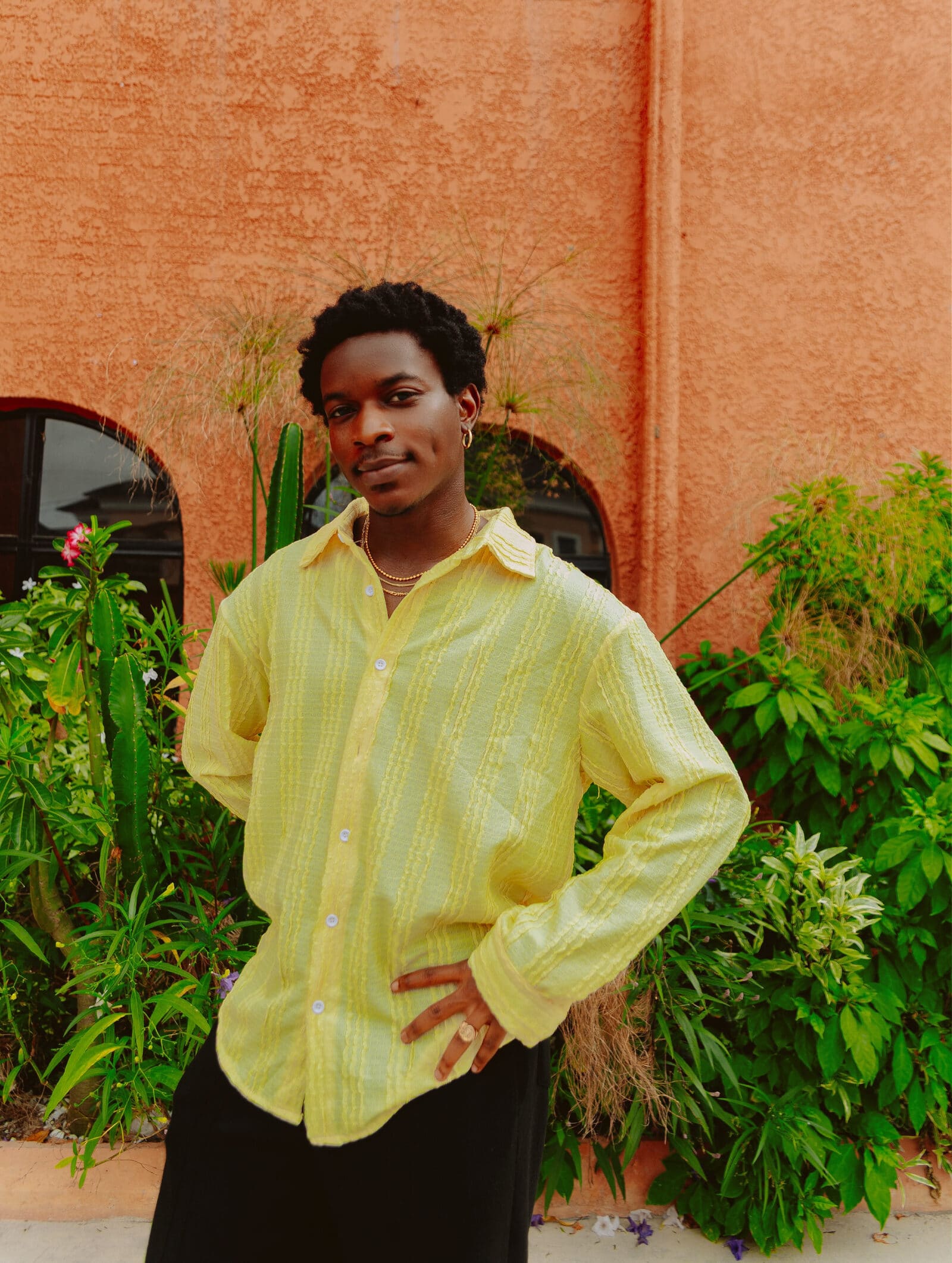
There are artists whose careers are shaped by moments, and then there are artists who quietly shape their careers over time.
For more than a decade, Jinmi Abduls has belonged to the latter. His journey has unfolded across multiple eras of Nigerian music. From Facebook uploads and Blackberry Messenger broadcasts to the rise of SoundCloud, the dominance of streaming platforms and today’s short-form content culture. Through it all, he has remained remarkably consistent, building a catalogue that has never relied on trends as much as it has relied on honest storytelling.
By the time records like Greed, Saro and more recently Hold You found their audiences, Jinmi had already spent years laying the foundation for the artist he would become.
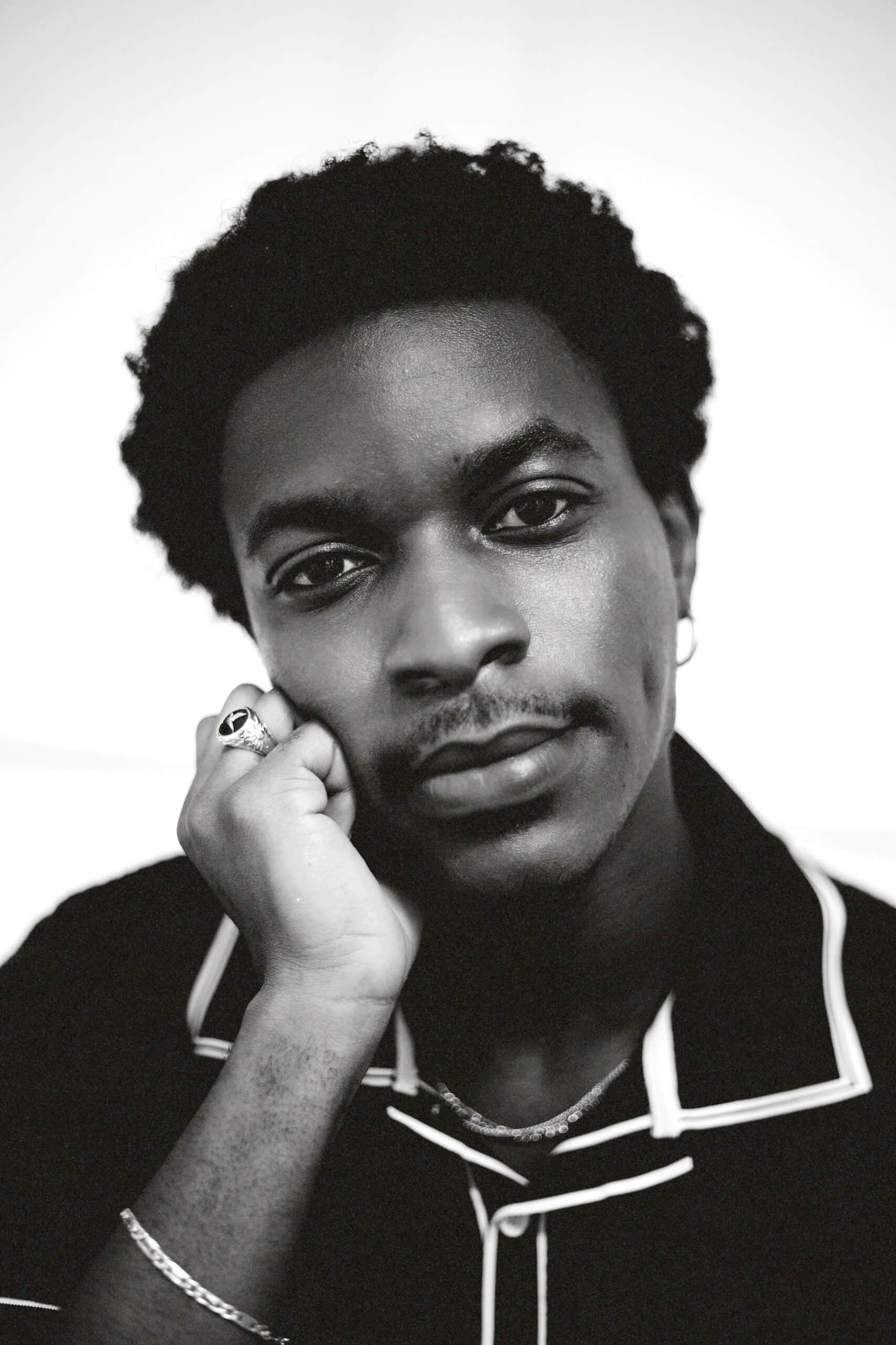
The Conversation With Jinmi Abduls
Our conversation was initially meant to revolve around Hold You and the project that’s set to follow it. Instead, it became something much bigger. We found ourselves talking about childhood dreams, evolving through different generations of music, the value of persistence, and why success has never been a destination for him.
It seemed only right to begin at the very beginning.
Critic Circle: I’ve been doing our research, and my first introduction to your music was Greed. I remember having that song on repeat for weeks. But for people who may be discovering you through Hold You or hearing your music for the first time, who exactly is Jinmi Abduls? What’s the simplest way you would introduce yourself?
Jinmi Abduls: That’s a great question. In one simple word, I’m a musician.
I like to put it that way because it’s much bigger than just singing. I produce music, I engineer music, I play musical instruments, I write music, not just for myself but for other people and I mentor younger musicians too.
So when I call myself a musician, it’s really a summary of all the different parts of music that I’m involved in. I think that’s the simplest way to describe who Jinmi Abduls is.
It was a simple answer, but it revealed something that would become increasingly clear as the conversation went on.
Jinmi doesn’t see music through separate roles or titles. To him, songwriting, production, engineering and performance all belong to the same creative process. They’re different expressions of the same gift.
That perspective naturally made us curious about where it all began.
Critic Circle: You’ve been making music since you were around eleven years old. That’s a very long time, and it also means you’ve experienced several different eras of Nigerian music, not just as someone watching from the outside, but as someone actively creating through them.
When you think back to that eleven-year-old Jinmi, what was it that made him decide he wanted to make music?
Jinmi smiled before answering, almost as though he’d travelled back to that moment.
Jinmi Abduls: You know what’s funny? I actually remember the music that was on the radio when I was eleven years old.
I was a child prodigy. I started playing musical instruments from a really young age because I spent a lot of time around church. The instrument I loved most back then was the harmonica, so when there was a children’s edition of a talent competition, I entered with it.
I ended up winning a radio phone. Back then, that was a really big deal because phones didn’t have cameras or social media. The best thing you could have on a phone was the radio.
I remember spending that whole summer listening to songs like Sean Kingston’s Beautiful Girls, Faze’s Originality and D’banj’s Fall In Love. I just fell in love with everything I was hearing.
Then it dawned on me that the one instrument I had never really tried was my own voice.
Now, I’m not going to lie and tell you the first hundred songs were amazing. They definitely weren’t. But I kept writing. I kept performing.I went to Whitesands School in Lekki, and every opportunity they gave us to perform, I’d get on stage and sing the little songs I’d been writing. Looking back now, I think that was really where everything started.
For many artists, beginnings are easy to remember. Staying the course is often the difficult part. What makes Jinmi’s story particularly interesting is that his career has evolved almost in step with the evolution of the internet itself.
He has watched the platforms change, the industry change and the audience change, yet somehow remained present through every phase.
Critic Circle: One thing I personally find fascinating about your journey is that you’ve not only witnessed these different eras, you’ve actually participated in them. You were putting out music during the Facebook era, then Blackberry Messenger, then SoundCloud, and now we’re in the age of streaming and TikTok.
When you look back, what stands out most about those different phases?
Jinmi Abduls: I started on Facebook. That was the first place I ever shared my music. Then came Blackberry Messenger and I was pushing my songs there too. By the time I got to university, Twitter and SoundCloud had become my platforms.
Back then they used to call us “SoundCloud artists.” It almost sounded like a diss because people believed our careers started and ended on social media since we didn’t have the kind of industry structure other artists had.
Looking back now, though, I actually think it was a beautiful time. We didn’t have access to radio, we didn’t have television, we didn’t have big concerts or industry connections. We simply did what we could with what we had, and somehow we built communities around the music.
I’ve watched CDs disappear. I’ve watched blogs become one of the biggest drivers of music discovery. I’ve watched streaming become the standard, and now we’re in a period where short-form content has completely changed the way artists communicate with audiences.
When I look back, I’m honestly just grateful for continuity. I’m grateful for growth, I’m grateful for evolution, and I’m grateful that after almost two decades I’m still creating music in another era.
His answer carried a quiet sense of gratitude, but beneath it sat something even more important: belief.
Every stage of his journey seemed to trace back to the same thing, the willingness to keep going, regardless of what the industry looked like at the time.
That prompted what would become one of the most revealing moments of the afternoon.
Critic Circle: When you look back at the younger version of yourself, the one who had just started making music, what do you think he got right? And if you had the opportunity to speak to him today, what would you tell him about everything that’s ahead?
Jinmi took a brief pause before answering.
Jinmi Abduls: The younger version of myself was a dreamer. He was delusional, and I actually think that’s a beautiful thing.
When we’re younger, we’re allowed to dream without limitations. First, somebody tells you there’s a monster coming and you believe it. Then you grow a little older and you believe Father Christmas is coming. Then you grow again and you believe you can become president. By the time I was around eleven or twelve, I believed I could become one of the biggest pop stars in the world.
That belief was enough to start everything.
Last year, someone asked me what I wanted for my birthday. I thought about it for a second and realised what I wanted most was the ability to dream a little longer. I don’t want the world to rob me of that because I genuinely believe dreaming is what keeps you moving.
If there’s one thing I’d tell the younger version of myself, it’s that progress isn’t linear. There’ll be highs and there’ll be lows. One day everybody knows your name, another day they’re not talking about you as much, and that’s okay because the beauty has always been in the journey.
People talk about “blowing” as though it’s a destination, but I don’t think there’s one place where you arrive and say, “I’ve made it.” That place doesn’t exist, not for me, not for Davido, not for Drake, not even for Michael Jackson. The journey keeps going, and I honestly think that’s the beautiful part of it.
For a moment, the conversation moved away from music entirely.
It became a reflection on ambition, patience and the quiet resilience required to keep believing in something long after the excitement of starting has faded.
Little did we know, the next story Jinmi shared would reveal just how far that belief once carried him.
The more Jinmi spoke about dreaming, the easier it became to understand why his career has unfolded the way it has.
For someone who believes so strongly in the journey, it almost felt inevitable that he would eventually share a story that perfectly captured what perseverance looked like before recognition arrived.
Long before streaming numbers, editorial playlists or sold-out shows, there was a teenager carrying demo CDs around Lagos with nothing but hope and conviction.
It remains one of the most vivid stories from our conversation.
Critic Circle: You’ve witnessed so many changes in the industry. We talked about the Facebook era, BBM, SoundCloud and streaming, but one era that stood out while doing our research was the CD era. There was something about physically carrying your music around that made it feel different. Looking back now, what do you remember most about that period?
Jinmi Abduls: Back then, CDs were everything. That was how you got your music to DJs. That was how you got your music to radio stations. If you wanted anybody to hear your music, you had to physically take it to them.
I remember when I was about seventeen years old, shortly after my dad passed. I used the last money I had saved in my kolo to buy about fifteen blank CDs. I put my demos on them, got on a bus from Ajah, where I was living at the time, and started going from one record label to another.
I went to Syndik8 Records. I went to Square Records. I went anywhere I could find on the internet where it was rumoured that record label executives might be. I also took those CDs to radio stations because I wanted somebody, anybody, to listen.
Most times they collected the CDs and nothing happened. They didn’t call back. They didn’t play the songs. But I never really saw those moments as failures. Looking back now, those CDs represented the hustle. They were a physical representation of wanting something badly enough to leave your house and chase it.
When CDs eventually disappeared and digital platforms started becoming more popular, I embraced that too. I was one of the earliest artists from my generation to move my catalogue to streaming platforms because I could already see where music was going.
The story lingered for a while.
There was something profoundly honest about hearing an artist revisit a season of his life when ambition outweighed certainty. It also explained why Jinmi speaks so calmly about longevity. He’s lived through enough seasons to know that careers aren’t built in a single moment.
If his journey has always been about telling stories, then it was only natural to ask where those stories come from.
One thing that has remained consistent across Jinmi’s catalogue is the emotional honesty in his writing. Whether it’s Greed, Saru, Long Distance or Hold You, his records often feel deeply personal, almost autobiographical.
But are they?
Critic Circle: One thing we’ve noticed over the years is that your music always feels intentional. There’s always a sense of vulnerability in it. Are these stories usually your own, or do they come from observation and imagination?
Jinmi Abduls: I like that you called them stories because that’s exactly how I see them. When I call myself a storyteller, I don’t just mean music. I write stories. I make films. Music just happens to be the art form most people know me for.
Most of my songs are inspired by true stories, but they’re not always my stories. I’m an observer. I have friends, I have family, I spend time with people, I scroll through social media, I watch films and I observe lovers a lot.
I really love love.
Sometimes I’ll write about yearning simply because I just spent the day third-wheeling with one of my friends and his girlfriend. I hang around couples a lot. I watch how people interact. I pay attention to emotions. So many of the love songs I’ve written didn’t necessarily come from my own experiences—they came from watching other people.
That answer naturally brought us to one of the defining songs in Jinmi’s catalogue.
For years, Iyawo Jinmi has been embraced as a romantic anthem. Many listeners simply assumed it was about a woman in his life.
The real story, however, is something entirely different.
Critic Circle: Let’s talk about Iyawo Jinmi. It’s a song that connected with so many people, but from everything you’ve shared today, it feels like there might be a deeper story behind it.
Jinmi Abduls: There is.
When I wrote that song, I wasn’t writing about myself. I was writing about something I had witnessed.
In the days leading up to my father’s passing, he had been diagnosed with cancer. The doctors gave him about three months to live, and funny enough, it ended up being almost exactly that.
I was in my first year at Babcock University studying Law, and because the doctors had put a timeline on everything, I started paying closer attention to my parents.
I realised they were genuinely friends. My mum just liked the man. She was always around him. She never made him feel alone. She never treated him like the end was coming. She simply continued loving him the same way she always had.
Watching that changed something in me.
I started wondering if somebody could ever love me like that. Could somebody ever choose you every single day, even in your most difficult moments?
That’s where Iyawo Jinmi came from, It was never about me, It was about a kind of love I had observed.
The song was so personal that I couldn’t release it immediately. I sat on it for about four or five years because it felt too vulnerable.
When it finally came out, everybody wanted to be Iyawo Jinmi. I got more people telling me they wanted to be my Iyawo Jinmi than I can remember.
If only they knew the story behind it.
By this point, the conversation had begun changing the way we understood Jinmi’s music.
Songs that once sounded like straightforward love records suddenly revealed entirely different layers. They weren’t always confessions. Sometimes they were observations. Sometimes they were memories.
And occasionally, they were both.
Before moving on, we shared something with him.
Listening to him explain the story behind Iyawo Jinmi reminded us of something we’ve discussed internally at Critic Circle over the years, that art today rarely waits to be interpreted the way it once did. Audiences want to understand the emotions behind the music almost immediately.
His explanation completely transformed the way we heard the record.
Naturally, we wanted to know whether Hold You came from a similar place.
Critic Circle: So where does Hold You come from? Is it another story you’ve observed, or is this one personal?
Jinmi laughed.
For the first time that afternoon, there was no hesitation.
Jinmi Abduls: This one is personal.
I wrote it about an ex. I still remember the first line coming to me. It was a very stormy morning sometime early last year. It was cold outside, the windows were misty and it was just one of those lazy mornings where you don’t want to leave the house.
I was in her arms and everything just felt safe, Nothing else mattered.
The first line that came into my head was, “Nothing in the world compares to when I hold you.”
That was where the song began, It was a rare admission from an artist who had spent most of the conversation explaining how many of his songs were inspired by the lives of other people.
This one belonged entirely to him.
With Hold You now out in the world, our conversation naturally turned towards what comes next.
Over the course of the interview, Jinmi had repeatedly described his life in eras. Each period carried its own memories, lessons and music.
It made perfect sense that his next project would be named after one of history’s greatest artistic movements.
Critic Circle: You’ve spoken about different chapters of your career throughout this conversation. Now there’s a new project on the way. Tell us about Renaissance.
Jinmi Abduls: This new project is called Renaissance because that’s genuinely where my head is artistically at the moment.
I’ve always measured different periods of my life by the music I was creating. Some people remember where they worked or who they were dating during a particular time. I remember the music.
I’ve had the Jinmi of Lagos era. I’ve had the From Lagos With Love era. Now I’m in what I call the Renaissance era.
Historically, the Renaissance represented a rebirth in art, and that’s exactly what this period feels like for me. My sound hasn’t changed, but the quality has improved. My confidence in the art forms I use to express myself is much stronger now.
It’s the same sound, just new quality.
I’ve also had the opportunity to work with Sparks Classic on this project, and that’s been a huge honour because he’s somebody I’ve admired for a very long time. Working with him pushed this project to another level.
Before wrapping up, there was one final question.
For an artist with more than sixty songs and dozens of collaborations, where should a new listener begin?
Critic Circle: If someone is discovering Jinmi Abduls today, what are the six songs you want them to hear first?
Jinmi Abduls: I’d start with Long Distance, Saru, Iyawo Jinmi, Braids, Shadi and Hold You.
Those songs represent different periods of my journey, but they’re all still me. Start there, then walk your way through the catalogue. I think you’ll have a good time.
As the conversation came to an end, we found ourselves reflecting less on releases, numbers or milestones, and more on a single thought that had quietly echoed throughout the afternoon.
Jinmi Abduls has spent almost two decades adapting to change without allowing change to redefine him.
Platforms have evolved, The industry has evolved, The audience has evolved.
Yet the one thing he has refused to outgrow is the ability to dream.
Perhaps that’s why one line from our conversation lingered long after everything else had been said.
“The beauty has always been in the journey.”
This interestingly leads us to share with you his most recent project, Renaissance which is now out on all streaming platforms.